

The Elahé Omidyar Mir-Djalali Institute of Iranian Studiesin collaboration with
the Federation of Zoroastrian Associations of North America,
the Ontario Zoroastrian Community Foundation,
the Zoroastrian Society of Ontario,
and the Encyclopaedia Iranica Foundation
jointly present
Monājāt and Muškil Āsān:
A Comparative Study of Zoroastrian Oral Literature in India and Iran
Saloumeh Gholami, University of Cambridge
Friday, April 10, 2026, 1:00 p.m. Eastern Time (Canada & US)
Rm 304, 4 Bancroft Ave
Toronto, ON M5S 1C1
Zoom Registration Link:
https://utoronto.zoom.us/meeting/register/Tz9jK-hRRyCOEz66FvxbYg
After registering, you will receive a confirmation email containing information about joining the meeting.
Abstract:
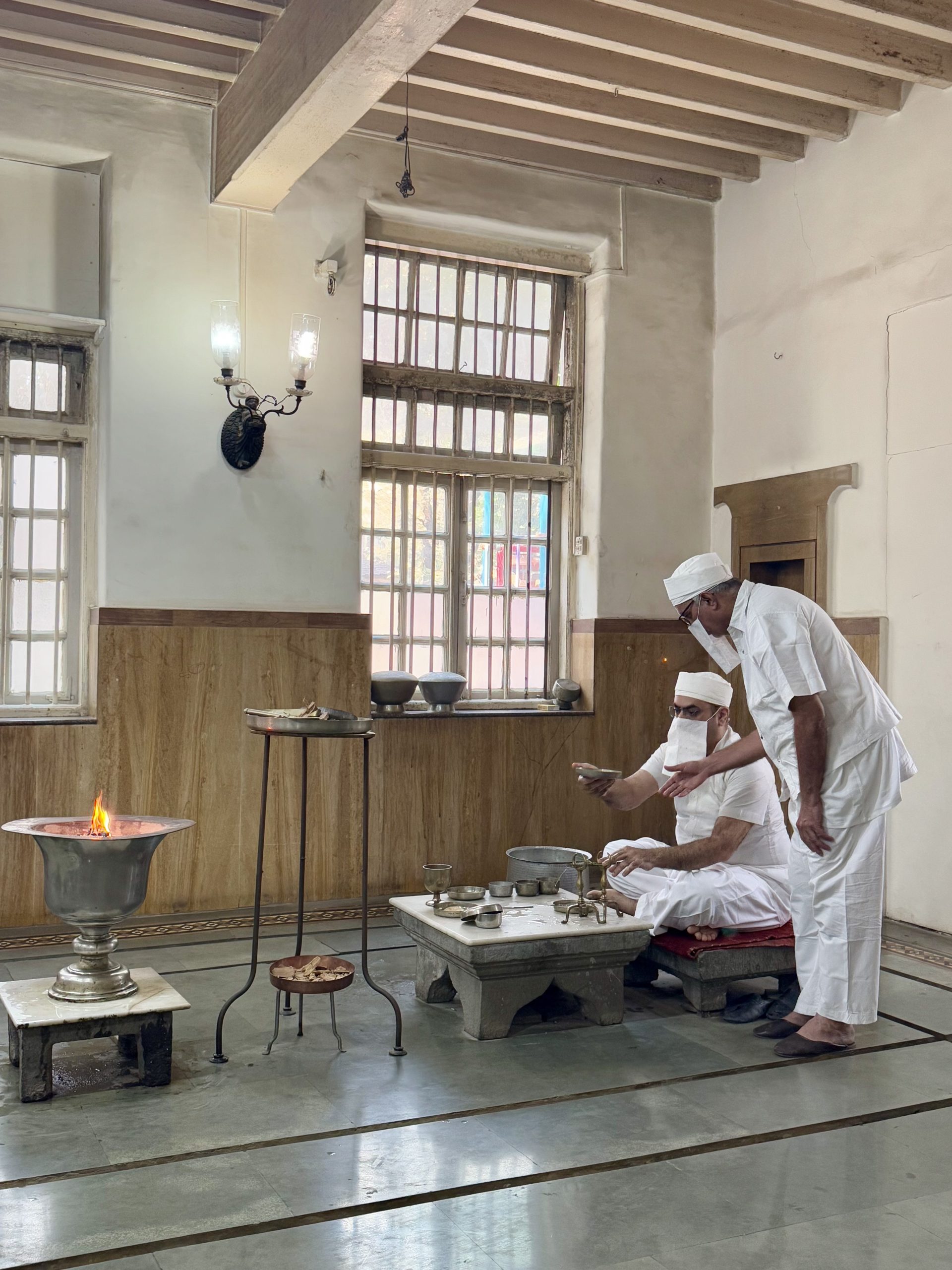
Based on recent fieldwork conducted in India (January 2026) and Iran (October 2025), this lecture examines two key genres of Zoroastrian oral literature—stories and songs—through a comparative lens, focusing on both the Indian and Iranian traditions. It explores how these genres have developed differently within each cultural context, shaped by the ideological perceptions of community members as well as broader social and political circumstances.
Within the song genre, the case of Monājāt is analysed, tracing its transformation from oral performance to written form and back again to oral practice. This discussion highlights the dynamic interplay between memory, textualisation, and performance in the preservation and adaptation of ritual poetry.
In the realm of storytelling, the lecture considers the Muškil Āsān ritual in India and its potential equivalence to the Muškil Gošā story of Iran. By comparing their evolution across the two traditions, the lecture examines cultural adaptation and continuity, as well as the role of narrative in sustaining communal identity.
The lecture addresses how oral literature is perceived and valued within priestly circles in both Indian and Iranian Zoroastrian communities, offering insights into the intersections of ritual authority, textual transmission, and popular devotion.
Bio:
Saloumeh Gholami is the British Academy Global Professor in the field of Zoroastrian Studies at the Faculty of Asian and Middle Eastern Studies, University of Cambridge, UK. In this role, she leads the project “Persisting Through Change: A Study of Oral Literature and Cultural Interaction in the Zoroastrian Community.” Before this, she served as Professor of Minority Languages of the Middle East at the University of Frankfurt. Her latest monograph, The Afterlife of Avestan Manuscripts: Colophons and Marginal Notes (2024), investigates the role of paratexts in the Zoroastrian scribal tradition.
Over the years, she has gained international recognition for her contributions to the safeguarding of endangered cultures and linguistic diversity, particularly within minority communities. As a linguist specialising in the documentation and preservation of endangered cultures, her work bridges language, rituals, and community history.